
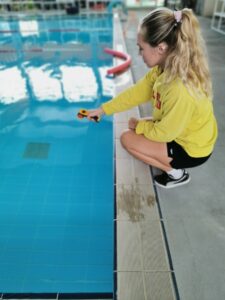
Water temperature must always match the client’s condition and the purpose of the session, as it directly affects safety and treatment outcomes.
For chronic disease management (31–33°C), warm water helps reduce stiffness, improve circulation, and support comfortable movement.
For pain management (32–34°C), warmer temperatures promote muscle relaxation and pain relief but increase fatigue and cardiovascular load, so close monitoring is required.
For heat-sensitive conditions such as MS and CFS (30–32°C), cooler water is needed to prevent overheating, dizziness, and symptom flare-ups.
For tethered running and deep-water exercise (27–29°C), cooler temperatures support higher-intensity cardiovascular training and reduce the risk of overheating.
Temperature selection must always consider the client’s diagnosis, exercise intensity, cardiovascular status, medications, and individual heat tolerance. Incorrect temperature increases the risk of fatigue, dizziness, and adverse events. If unsure, consult a more