
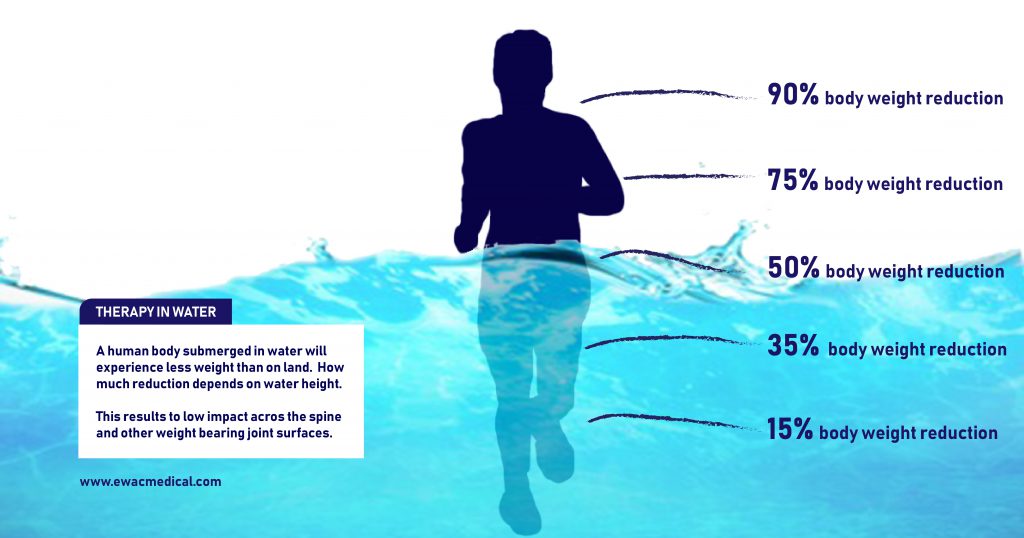
Buoyancy
Buoyancy is the upward force that reduces body weight in water. As water depth increases, body weight decreases. This reduces joint load, making movement easier and safer for clients with pain, weakness, or mobility restrictions. It allows earlier movement after injury or surgery and improves confidence with exercise.
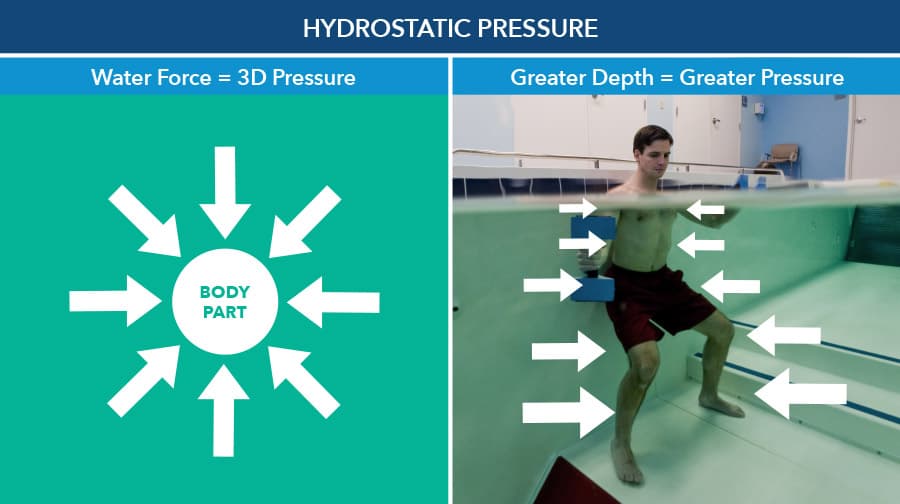
Hydrostatic Pressure
Hydrostatic pressure is the pressure exerted by water on the body. It increases with depth and supports circulation, reduces swelling, and provides external stability to joints. This assists with oedema management, postural control, and balance training.
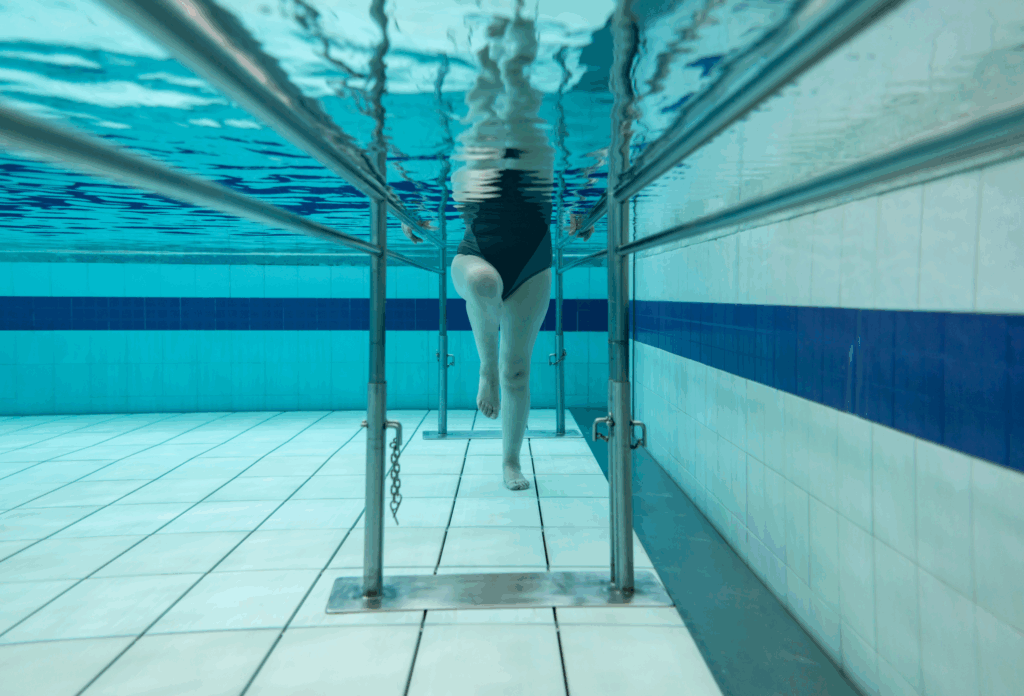
Viscosity and Resistance
Water provides constant resistance in all directions. The faster the movement, the greater the resistance. This allows safe strengthening without heavy weights and enables easy progression or regression of exercises by changing speed, lever length, or equipment.

Turbulence and Drag
Movement in water creates turbulence and drag forces. These challenge balance, core stability, and coordination. Turbulence can be increased manually or with equipment to progress difficulty for strength and neuromuscular control training.
Thermal Properties of Water
Warm water promotes muscle relaxation, reduces pain, improves circulation, and increases tissue extensibility. This makes it ideal for treating stiffness, chronic pain, neurological conditions, and stress-related conditions.

Centre of Buoyancy vs Centre of Gravity
In water, the centre of buoyancy and centre of gravity do not align, creating natural instability. This is used to train balance, posture, trunk control, and functional movement patterns safely.